
Fishing Marketing for Charters & Guides
The Complete 2026 Growth Guide
Running a successful charter business in 2026 has less to do with finding fish — and more to do with how people find you, decide to trust you, and actually book a trip.
The charter industry hasn’t changed overnight. But customer behavior has. Technology plays a bigger role than it ever has before. Competition is heavier. Expectations are higher. And small breakdowns in marketing or follow-up now cost real money.
This guide is built to help charter captains and guides understand what actually drives growth today — and how the strongest operators are setting themselves up to stay booked without turning their business into a full-time marketing job.
Foundations: Treating the Charter Like a Business
Every marketing problem eventually traces back to one thing: ownership.
The captains who grow year after year see their operation as a real business — not just a boat with a phone number. That shift changes everything.
Strong foundations mean:
- Clear trip offerings and pricing
- A professional online presence that reflects how you actually operate
- Systems that don’t depend on memory, luck, or last-minute scrambling
Relying entirely on booking sites, referrals, or “hoping things pick up” limits control. Growth starts when captains decide to own their visibility, their leads, and their customer experience.
If this foundation isn’t solid, no amount of ads or content will fix it.
Visibility: Getting Found Where It Counts
More than ever, customers research before they book — even when the recommendation comes from a friend, hotel, or marina.
Visibility in 2026 is about showing up in the moments that matter:
- Local Google searches
- Map results
- AI-powered search summaries
- Brand name searches after a referral
Local SEO plays a role here, but it’s not just about keywords.
What actually drives visibility:
- A properly optimized Google Business Profile
- Consistent, recent reviews
- Clear location and service relevance
- Real photos and regular updates
Generic content and “set it and forget it” websites don’t compete anymore. Captains who stay visible treat this as ongoing maintenance, not a one-time project.
Paid Exposure: Using Ads the Right Way
Paid advertising works in the charter industry — booking sites prove that every day.
Where captains get burned is trying to run ads without the right structure underneath.
Ads work best when:
- They target high-intent searches
- The website answers questions clearly and quickly
- There’s a fast response system behind the scenes
Ads don’t replace organic visibility. They support it, especially:
- During peak season
- In competitive markets
- When expanding into new trip types or locations
When foundations are weak, ads feel expensive. When foundations are solid, ads become predictable.
Trust: Why Customers Choose One Captain Over Another
Most customers aren’t trying to find the “cheapest” captain.
They’re trying to avoid making a bad choice.
Trust signals are what tip the decision:
- Reviews (quantity, quality, and recency)
- Clear communication
- Professional presentation
- Evidence that you’re active and reliable
Trust is also built through content — not marketing fluff, but real signals:
- Fishing reports
- Captain insights
- Photos from recent trips
- Clear explanations of what to expect
Captains who position themselves as local experts outperform those who try to appeal to everyone.
Conversion: Turning Interest Into Booked Trips
Getting attention is only half the battle. Converting it is where most opportunities are lost.
Common conversion problems:
- Confusing websites
- No clear “next step”
- Slow or missed responses
- Mobile experiences that frustrate users
In 2026, customers expect:
- Fast answers
- Simple booking options
- Clear pricing and policies
- Minimal friction
If someone has to wait hours for a reply or hunt for information, they move on. Conversion is less about persuasion and more about removing obstacles.
Technology & Automation: Supporting the Captain
Technology isn’t about replacing captains — it’s about covering the gaps that exist when you’re on the water, with customers, or off the clock.
In modern charter businesses, technology helps with:
- Instant responses to inquiries
- Capturing missed calls and messages
- Organizing leads and conversations
- Automating follow-up and review requests
AI and automation work best in the background, handling repetitive and time-sensitive tasks so captains can focus on running trips.
The goal isn’t complexity.
The goal is consistency without effort.

Bringing It All Together: A Simple Growth Framework
At this point, you may be noticing a pattern.
Everything that works in charter marketing — visibility, trust, technology, follow-up — isn’t random. It fits together in a specific order. When that order is off, marketing feels frustrating and unpredictable. When it’s right, things get simpler.
Over the years, working with hundreds of captains and tour operators, we’ve seen the same structure show up again and again in businesses that stay booked and keep growing.
That structure is what we refer to internally as the Get Booked System.
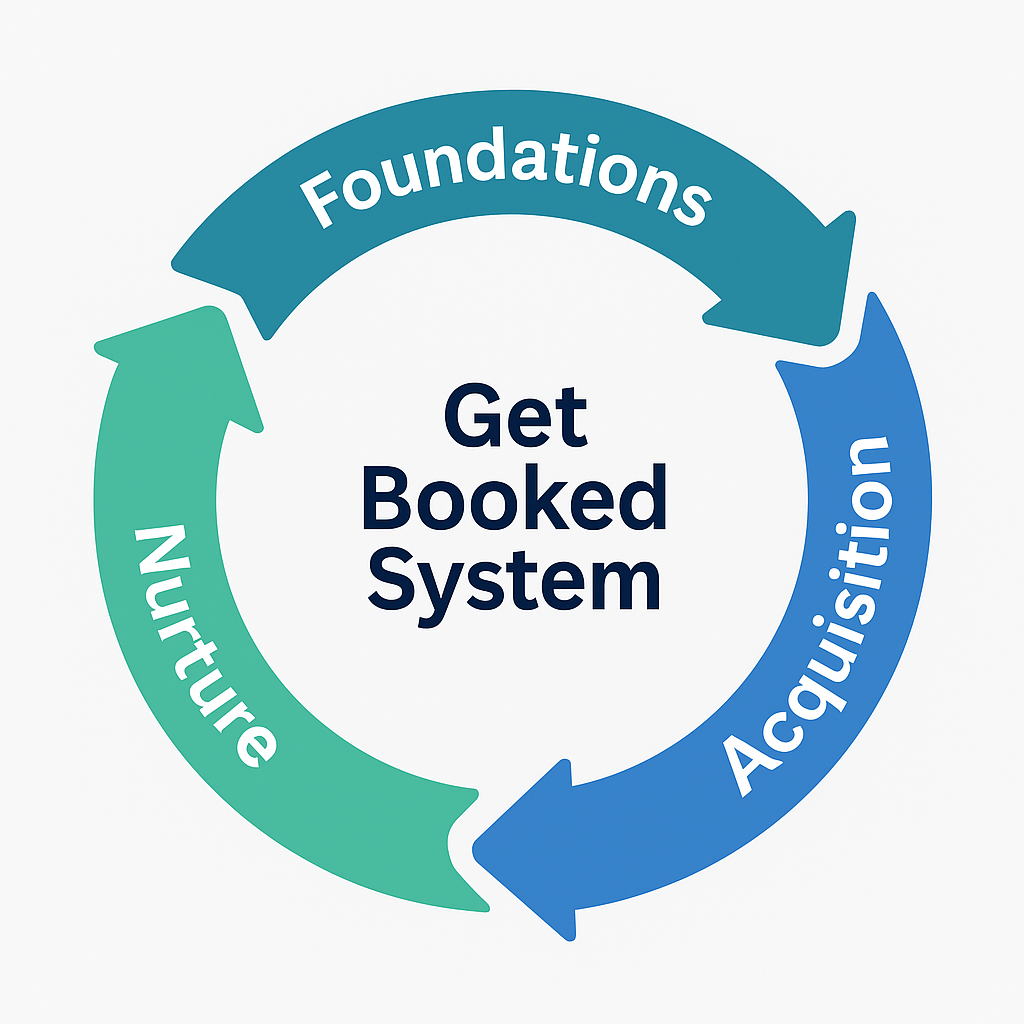
The Saltwater Marketing Get Booked System
The system is a way of organizing how growth actually happens in the charter business.
At a high level, it breaks down into three connected stages:
Get Found
Show up where customers are already looking — through local visibility, search, and paid exposure.
Build Trust
Give people confidence they’re making the right choice — through reviews, content, clarity, and professionalism.
Book & Nurture
Make booking easy, respond quickly, and stay connected after the trip — so one booking leads to the next.
Miss one stage, and the rest struggle.
Support all three, and marketing starts to work.
This framework is what everything in this guide is built on — from SEO and ads to reviews, technology, and follow-up.
Final Takeaway
The captains doing well in 2026 aren’t doing anything flashy — they’ve just built systems that work consistently.
They:
- Control their visibility
- Build trust before the first conversation
- Respond quickly
- Use technology to stay consistent
- Think beyond the next trip
Marketing success today isn’t about tricks.
It’s about building a clear, reliable system that works while you’re on the water — and keeps working long after the trip is over.
Ready to Grow?
We Can Make It Happen
Ready to Grow?
We Can Make It Happen